
Escaping Escapism

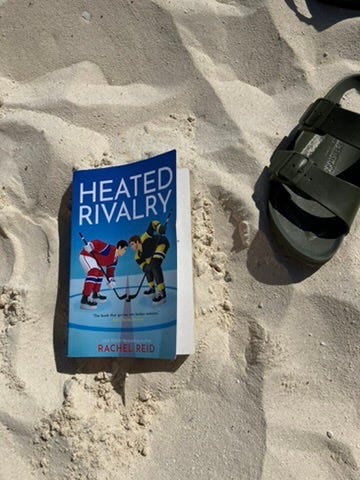
So far in 2026 I have read ten books. Of those ten, five were romance novels. Specifically they were books from Rachel Reid’s Game Changers series. These books were adapted into the hit HBO series Heated Rivalry which I have now watched twice. Watching the series in December of last year got me through a hard time. In Maine, where I live, it’s very dark in December. I sprained my ankle and couldn’t run. We had just moved out of our house. I was out of sorts (read: sinking into seasonal depression.) Watching this blisteringly sexy, gorgeously tender show was exactly what I needed.
But I’m not sure I would call it escapist. I liked the show because it was immersive. I was fully attentive as I watched. It’s not a TV show that I would put on while scrolling on my phone or folding laundry. Heated Rivalry with its sprawling timeline and fun early aughts period costuming and sexy amber lighting was a show I watched for the details. I liked catching the jokes and noticing the very good face acting. It merited attention! It made me think about queer athletes and my own body and plot structure.
In general I’m not really a fan of escape. This is the part of the essay where I seem like a jerk. But let me defend myself. I am not saying I avoid lighthearted books and television. I love watching some of the worst cooking reality shows ever produced (here I mean Is It Cake?) and I used to not only watch The Bachelor but I followed along with several “Bachelor Nation” podcasts. I read and write romance. Lately I haven’t found as many queer romance novels that resonate as I would like, but that’s a different essay for a different day. I prefer immersion to escape. At some point, we started using “escapist” as a shorthand for “just low quality enough that I turn my brain off and slip into the tepid waters of mediocrity.” And I don’t think bad books are enjoyable! I also don’t think bad books are capable of holding my attention.
I read the Game Changers books mostly on the beach. I had literally escaped the cold Maine winter to lay in the Mexican sun and slather myself in freaky reef-safe sunscreen and swim in the Caribbean Sea. The books were immersive! They were fast and cute and fun to read and I devoured them in the sunshine. They had funny characters and sweet moments and classic romance novel structure. But they weren’t the most immersive thing I read on my vacation. They weren’t the most escapist.
The day my wife and I flew down to Cancun was the kind of nightmare travel day that feels like an absolute tragedy to those involved and is nothing more than a dull story those listening to it nod politely along with. “And then the line to get meal vouchers was so long that…” you zoned out and started thinking about what you’re having for dinner, right? I was intensely stressed that our trip was ruined and furious at The Airline Industry. I was also finishing Meg Howrey’s They’re Going to Love You, a novel about a ballet dancer’s estrangement from her gay father during the AIDS crisis, and could not put it down. I wrapped myself in the beautiful prose and laid the tragedy of family conflict and grief over my own dumb problems. Reading this book was the perfect escape. It’s also literary fiction. Literary fiction about grief and art! People never talk about literary fiction being escapist!
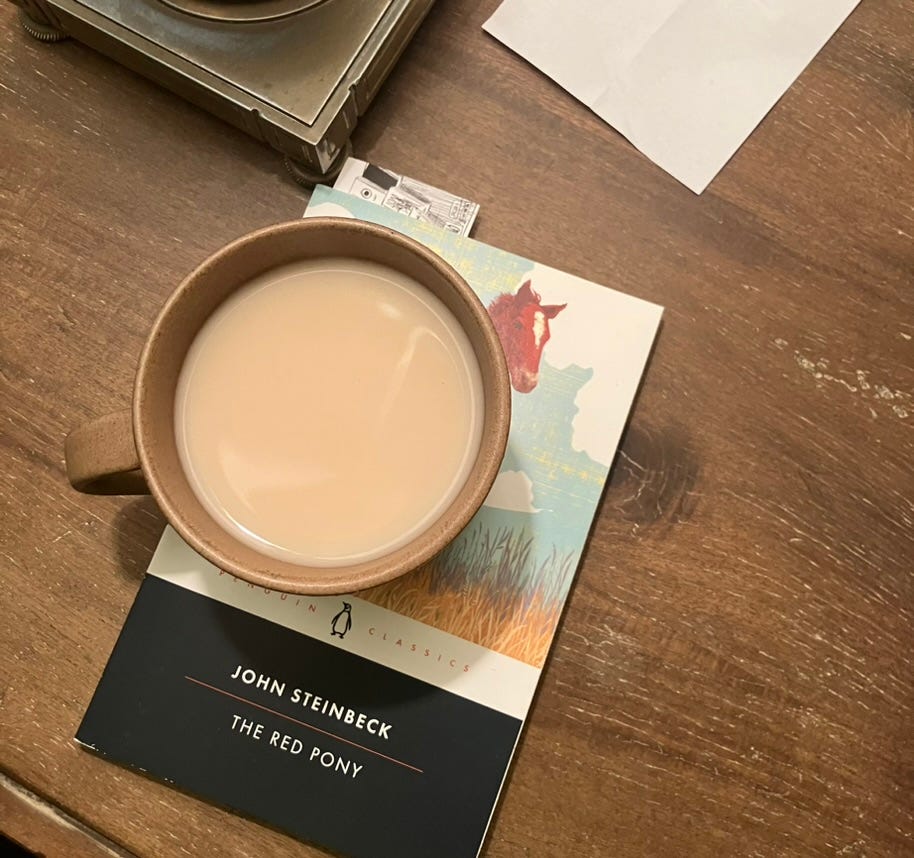
Right before I started They’re Going to Love You I read John Steinbeck’s linked story collection The Red Pony. The stories are classic Steinbeck stuff: loss of innocence, harsh nature, the pain of coming-of-age. Let me tell you, these stories had me gripped. I found the writing so crystalline and beautiful I reread passages over and over, sinking into the imagery. Escaping into it. Immersing myself.
Ultimately I think I just feel defensive because I wrote a depressing as hell young adult novel in a time when everyone seems to want to read other kinds of stuff. Light romcoms and dark romantasy, yes. Books about gay teens dealing with grief after 9/11… I hope so! But I have always been a reader who connects with bummer books. I loved emo-kid classic, The Perks of Being a Wallflower in high school. In college I reread Haruki Murakami’s Norwegian Wood, a novel about depression and lost love, at least four times. I loved that book so much it was the name of my WiFi network until we switched service providers and named the new network after our cat. My all-time favorite novel is The Miseducation of Cameron Post, a story about being sent to conversion therapy after a tragic loss. I don’t find these books depressing. I find them bracing, enriching, and connective.
I guess what I’m trying to say is that in this moment of declining literacy rates and rising fascism I think it’s okay to read whatever the fuck you want. But I also think that reading the sad books can actually make you happy. Reading takes us outside ourselves. It helps us know and inhabit other ways of being. It isn’t escape if you’re paying attention.
P.S. If you’re looking for a book that is a perfect fun but nourishing read, I SUPER recommend Woodworking by Emily St. James. It’s at times laugh out loud funny and it made me cry and I love what she does with voice and perspective. WOW!
Just discovered your substack and I hope you offer a critique group through the Makers Market at some point. My reading this past winter in Maine: I just read Thomas' Idlewild and have been diving back into the fantasy genre to escape the regime b.s. The Kingkiller Chronicles by Patrick Rothfuss, 2 books, could not put them down. Cheers to escapism.
I live for your posts!